
Secondary Infertility in Women
Shop through our latest selection of Fashion
Secondary Infertility in Women
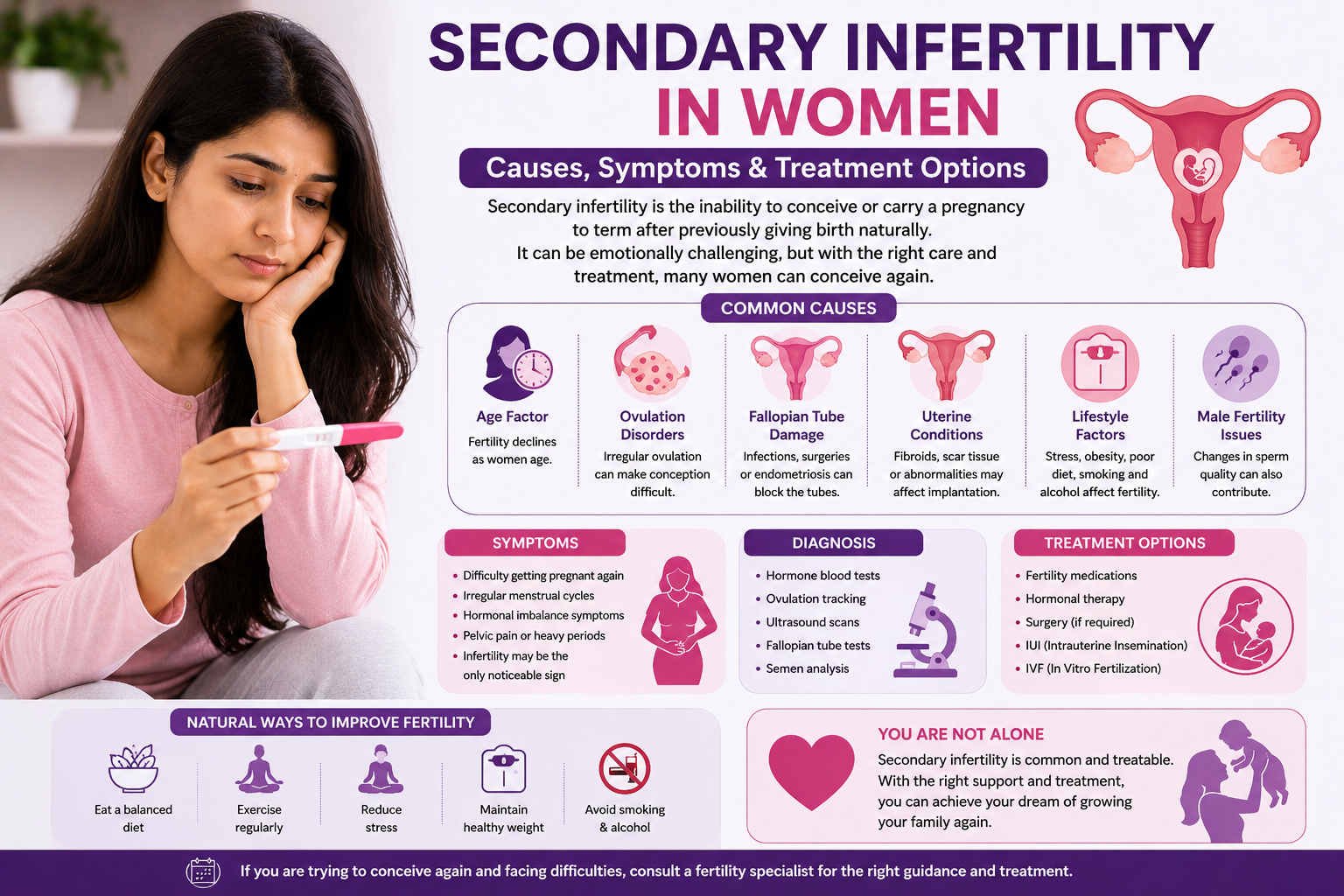
Secondary Infertility in Women: Causes, Symptoms & Treatment Options
Introduction
Many couples believe that once they have one child, getting pregnant again will happen naturally and easily. However, for some women, conceiving a second time becomes unexpectedly difficult. This condition is known as secondary infertility.
Secondary infertility can be emotionally challenging because couples often do not anticipate fertility problems after already experiencing a successful pregnancy. Many women feel confused, stressed, or even guilty when they struggle to conceive again. The good news is that secondary infertility is a common and treatable condition. Understanding its causes, symptoms, diagnosis, and treatment options can help couples take the right steps toward growing their family.
What is Secondary Infertility?
Secondary infertility refers to the inability to conceive or carry a pregnancy to full term after previously giving birth naturally without fertility treatments.
Doctors generally diagnose secondary infertility when a couple has been trying to conceive for:
12 months without success if the woman is under 35 years old
6 months without success if the woman is above 35 years old
Even if a woman had a healthy first pregnancy, changes in reproductive health over time can affect fertility.
How Common is Secondary Infertility?
Secondary infertility is more common than many people realize. Millions of couples worldwide experience difficulty conceiving their second child.
In many cases, couples are surprised because they assume fertility will remain the same after their first pregnancy. However, fertility naturally changes with age, hormonal health, lifestyle, and medical conditions.
Both male and female factors can contribute to secondary infertility.
Causes of Secondary Infertility
Several medical and lifestyle factors may affect fertility after a previous pregnancy.
1. Age-Related Fertility Decline
One of the most common causes is increasing age. As women grow older, both the quality and quantity of eggs decrease. Fertility begins to decline gradually after age 30 and more rapidly after age 35.
Older eggs may also increase the risk of miscarriage and pregnancy complications.
2. Ovulation Disorders
Regular ovulation is essential for pregnancy. Hormonal imbalances can interfere with ovulation and reduce fertility.
Common ovulation-related conditions include:
PCOS (Polycystic Ovary Syndrome)
Thyroid disorders
High prolactin levels
Irregular menstrual cycles
Women who do not ovulate regularly may have difficulty conceiving naturally.
3. Fallopian Tube Damage
The fallopian tubes carry the egg from the ovary to the uterus. If the tubes are blocked or damaged, fertilization may not occur.
Tube damage may result from:
Pelvic infections
Previous surgeries
Endometriosis
Sexually transmitted infections (STIs)
4. Endometriosis
Endometriosis occurs when tissue similar to the uterine lining grows outside the uterus. It can cause inflammation, pain, scar tissue, and fertility problems.
Some women may develop endometriosis after their first pregnancy, leading to secondary infertility.
5. Uterine Conditions
Certain uterine problems can affect implantation and pregnancy.
These include:
Fibroids
Uterine polyps
Scar tissue from previous deliveries or surgeries
Abnormal uterine shape
Such conditions may reduce the chances of successful implantation.
6. Lifestyle Factors
Modern lifestyle habits can significantly affect fertility.
Common lifestyle-related causes include:
Stress
Obesity
Poor diet
Smoking
Alcohol consumption
Lack of sleep
Weight gain after the first pregnancy may also contribute to hormonal imbalance and ovulation problems.
7. Male Fertility Problems
Secondary infertility is not always caused by female reproductive issues. Changes in male fertility can also contribute.
Factors affecting sperm health include:
Low sperm count
Poor sperm motility
Smoking
Alcohol use
Medical conditions
Stress
A semen analysis is often recommended during fertility evaluation.
Symptoms of Secondary Infertility
The main symptom is difficulty becoming pregnant again after previously having a child.
Other possible signs include:
Irregular periods
Missed periods
Pelvic pain
Painful menstruation
Heavy bleeding
Hormonal imbalance symptoms
Pain during intercourse
However, many women may not experience obvious symptoms apart from infertility itself.
Risk Factors
Certain factors increase the risk of secondary infertility, including:
Pregnancy after age 30 or 35
History of miscarriage
Previous pelvic infections
Endometriosis
Obesity or rapid weight gain
Chronic stress
Smoking or alcohol use
Previous cesarean section complications
Understanding these risk factors can help couples seek medical advice early.
How Secondary Infertility is Diagnosed
A fertility specialist may recommend several tests to identify the underlying cause.
Common Diagnostic Tests
Hormone Blood Tests
These tests evaluate reproductive hormone levels and ovulation function.
Ovulation Tracking
Doctors monitor ovulation through ultrasound or hormone testing.
Pelvic Ultrasound
Ultrasound scans help detect fibroids, ovarian cysts, or uterine abnormalities.
HSG Test (Hysterosalpingography)
This test checks whether the fallopian tubes are blocked.
Semen Analysis
Male fertility testing evaluates sperm count, movement, and quality.
A complete fertility evaluation helps doctors develop the best treatment plan.
Treatment Options for Secondary Infertility
Treatment depends on the specific cause of infertility.
1. Fertility Medications
Medicines may stimulate ovulation and improve egg release in women with ovulation disorders.
2. Hormonal Therapy
Hormone treatment helps correct thyroid problems, PCOS, or other hormonal imbalances affecting fertility.
3. Surgery
Surgical procedures may remove:
Fibroids
Polyps
Scar tissue
Endometriosis tissue
Surgery can improve reproductive function and implantation chances.
4. IUI (Intrauterine Insemination)
In IUI treatment, healthy sperm is directly placed inside the uterus during ovulation to increase fertilization chances.
5. IVF (In Vitro Fertilization)
IVF is one of the most effective fertility treatments. Eggs are fertilized outside the body and then implanted into the uterus.
IVF may be recommended for severe fertility issues or blocked fallopian tubes.
Natural Ways to Improve Fertility
Healthy lifestyle changes can support reproductive health and improve pregnancy chances.
Eat a Balanced Diet
Nutrient-rich foods support hormonal balance and egg quality.
Include:
Fruits and vegetables
Whole grains
Protein-rich foods
Healthy fats
Exercise Regularly
Moderate physical activity improves blood circulation and hormone function.
Avoid excessive exercise, which may negatively affect ovulation.
Reduce Stress
Stress can interfere with reproductive hormones.
Helpful stress-management techniques include:
Yoga
Meditation
Deep breathing
Counseling
Maintain Healthy Weight
Both obesity and being underweight can affect fertility and ovulation.
Maintaining a healthy BMI improves pregnancy chances.
Avoid Smoking & Alcohol
Smoking and alcohol can damage egg quality and reduce fertility in both men and women.
Tips to Increase Pregnancy Chances
Track ovulation carefully
Have intercourse during fertile days
Follow a healthy lifestyle
Get regular medical check-ups
Take prenatal vitamins
Follow your doctor’s recommendations
Early medical guidance often improves treatment success rates.
Emotional Impact of Secondary Infertility
Secondary infertility can create emotional stress, anxiety, frustration, and sadness.
Many women feel isolated because others assume having one child means fertility is not a problem. Social pressure and family expectations may also increase emotional burden.
Seeking emotional support from:
Family members
Fertility counselors
Support groups
Mental health professionals
can help couples cope with stress during fertility treatment.
When to See a Doctor
Consult a fertility specialist if:
You have been trying for over 1 year without success
You are above 35 and unable to conceive after 6 months
You experience irregular periods
You have pelvic pain or heavy bleeding
You have a history of miscarriage or reproductive disorders
Early diagnosis can improve the chances of successful treatment.
Conclusion
Secondary infertility is a common yet manageable fertility condition that affects many couples worldwide. Even after a healthy first pregnancy, age, hormonal imbalance, medical conditions, lifestyle habits, or male fertility issues can impact the ability to conceive again.
The good news is that many effective treatments and lifestyle improvements are available today. With proper diagnosis, medical care, emotional support, and healthy habits, many women successfully overcome secondary infertility and expand their families.
Introduction
Many couples believe that once they have one child, getting pregnant again will happen naturally and easily. However, for some women, conceiving a second time becomes unexpectedly difficult. This condition is known as secondary infertility.
Secondary infertility can be emotionally challenging because couples often do not anticipate fertility problems after already experiencing a successful pregnancy. Many women feel confused, stressed, or even guilty when they struggle to conceive again. The good news is that secondary infertility is a common and treatable condition. Understanding its causes, symptoms, diagnosis, and treatment options can help couples take the right steps toward growing their family.
What is Secondary Infertility?
Secondary infertility refers to the inability to conceive or carry a pregnancy to full term after previously giving birth naturally without fertility treatments.
Doctors generally diagnose secondary infertility when a couple has been trying to conceive for:
12 months without success if the woman is under 35 years old
6 months without success if the woman is above 35 years old
Even if a woman had a healthy first pregnancy, changes in reproductive health over time can affect fertility.
How Common is Secondary Infertility?
Secondary infertility is more common than many people realize. Millions of couples worldwide experience difficulty conceiving their second child.
In many cases, couples are surprised because they assume fertility will remain the same after their first pregnancy. However, fertility naturally changes with age, hormonal health, lifestyle, and medical conditions.
Both male and female factors can contribute to secondary infertility.
Causes of Secondary Infertility
Several medical and lifestyle factors may affect fertility after a previous pregnancy.
1. Age-Related Fertility Decline
One of the most common causes is increasing age. As women grow older, both the quality and quantity of eggs decrease. Fertility begins to decline gradually after age 30 and more rapidly after age 35.
Older eggs may also increase the risk of miscarriage and pregnancy complications.
2. Ovulation Disorders
Regular ovulation is essential for pregnancy. Hormonal imbalances can interfere with ovulation and reduce fertility.
Common ovulation-related conditions include:
PCOS (Polycystic Ovary Syndrome)
Thyroid disorders
High prolactin levels
Irregular menstrual cycles
Women who do not ovulate regularly may have difficulty conceiving naturally.
3. Fallopian Tube Damage
The fallopian tubes carry the egg from the ovary to the uterus. If the tubes are blocked or damaged, fertilization may not occur.
Tube damage may result from:
Pelvic infections
Previous surgeries
Endometriosis
Sexually transmitted infections (STIs)
4. Endometriosis
Endometriosis occurs when tissue similar to the uterine lining grows outside the uterus. It can cause inflammation, pain, scar tissue, and fertility problems.
Some women may develop endometriosis after their first pregnancy, leading to secondary infertility.
5. Uterine Conditions
Certain uterine problems can affect implantation and pregnancy.
These include:
Fibroids
Uterine polyps
Scar tissue from previous deliveries or surgeries
Abnormal uterine shape
Such conditions may reduce the chances of successful implantation.
6. Lifestyle Factors
Modern lifestyle habits can significantly affect fertility.
Common lifestyle-related causes include:
Stress
Obesity
Poor diet
Smoking
Alcohol consumption
Lack of sleep
Weight gain after the first pregnancy may also contribute to hormonal imbalance and ovulation problems.
7. Male Fertility Problems
Secondary infertility is not always caused by female reproductive issues. Changes in male fertility can also contribute.
Factors affecting sperm health include:
Low sperm count
Poor sperm motility
Smoking
Alcohol use
Medical conditions
Stress
A semen analysis is often recommended during fertility evaluation.
Symptoms of Secondary Infertility
The main symptom is difficulty becoming pregnant again after previously having a child.
Other possible signs include:
Irregular periods
Missed periods
Pelvic pain
Painful menstruation
Heavy bleeding
Hormonal imbalance symptoms
Pain during intercourse
However, many women may not experience obvious symptoms apart from infertility itself.
Risk Factors
Certain factors increase the risk of secondary infertility, including:
Pregnancy after age 30 or 35
History of miscarriage
Previous pelvic infections
Endometriosis
Obesity or rapid weight gain
Chronic stress
Smoking or alcohol use
Previous cesarean section complications
Understanding these risk factors can help couples seek medical advice early.
How Secondary Infertility is Diagnosed
A fertility specialist may recommend several tests to identify the underlying cause.
Common Diagnostic Tests
Hormone Blood Tests
These tests evaluate reproductive hormone levels and ovulation function.
Ovulation Tracking
Doctors monitor ovulation through ultrasound or hormone testing.
Pelvic Ultrasound
Ultrasound scans help detect fibroids, ovarian cysts, or uterine abnormalities.
HSG Test (Hysterosalpingography)
This test checks whether the fallopian tubes are blocked.
Semen Analysis
Male fertility testing evaluates sperm count, movement, and quality.
A complete fertility evaluation helps doctors develop the best treatment plan.
Treatment Options for Secondary Infertility
Treatment depends on the specific cause of infertility.
1. Fertility Medications
Medicines may stimulate ovulation and improve egg release in women with ovulation disorders.
2. Hormonal Therapy
Hormone treatment helps correct thyroid problems, PCOS, or other hormonal imbalances affecting fertility.
3. Surgery
Surgical procedures may remove:
Fibroids
Polyps
Scar tissue
Endometriosis tissue
Surgery can improve reproductive function and implantation chances.
4. IUI (Intrauterine Insemination)
In IUI treatment, healthy sperm is directly placed inside the uterus during ovulation to increase fertilization chances.
5. IVF (In Vitro Fertilization)
IVF is one of the most effective fertility treatments. Eggs are fertilized outside the body and then implanted into the uterus.
IVF may be recommended for severe fertility issues or blocked fallopian tubes.
Natural Ways to Improve Fertility
Healthy lifestyle changes can support reproductive health and improve pregnancy chances.
Eat a Balanced Diet
Nutrient-rich foods support hormonal balance and egg quality.
Include:
Fruits and vegetables
Whole grains
Protein-rich foods
Healthy fats
Exercise Regularly
Moderate physical activity improves blood circulation and hormone function.
Avoid excessive exercise, which may negatively affect ovulation.
Reduce Stress
Stress can interfere with reproductive hormones.
Helpful stress-management techniques include:
Yoga
Meditation
Deep breathing
Counseling
Maintain Healthy Weight
Both obesity and being underweight can affect fertility and ovulation.
Maintaining a healthy BMI improves pregnancy chances.
Avoid Smoking & Alcohol
Smoking and alcohol can damage egg quality and reduce fertility in both men and women.
Tips to Increase Pregnancy Chances
Track ovulation carefully
Have intercourse during fertile days
Follow a healthy lifestyle
Get regular medical check-ups
Take prenatal vitamins
Follow your doctor’s recommendations
Early medical guidance often improves treatment success rates.
Emotional Impact of Secondary Infertility
Secondary infertility can create emotional stress, anxiety, frustration, and sadness.
Many women feel isolated because others assume having one child means fertility is not a problem. Social pressure and family expectations may also increase emotional burden.
Seeking emotional support from:
Family members
Fertility counselors
Support groups
Mental health professionals
can help couples cope with stress during fertility treatment.
When to See a Doctor
Consult a fertility specialist if:
You have been trying for over 1 year without success
You are above 35 and unable to conceive after 6 months
You experience irregular periods
You have pelvic pain or heavy bleeding
You have a history of miscarriage or reproductive disorders
Early diagnosis can improve the chances of successful treatment.
Conclusion
Secondary infertility is a common yet manageable fertility condition that affects many couples worldwide. Even after a healthy first pregnancy, age, hormonal imbalance, medical conditions, lifestyle habits, or male fertility issues can impact the ability to conceive again.
The good news is that many effective treatments and lifestyle improvements are available today. With proper diagnosis, medical care, emotional support, and healthy habits, many women successfully overcome secondary infertility and expand their families.